Observing the annual sandhill crane migration is a unique and moving experience, one that attracts viewers from all around the world. Nearly one million sandhill cranes flock to the shores of the Platte River to recuperate along their migratory route, and this is a particularly special event for Grand Island residents, who live a short distance away from these shores. Sandhill cranes typically gather along the river from February until mid-April. Let’s take a look at these fascinating birds before the opportunity to observe their migration dwindles for the next year:
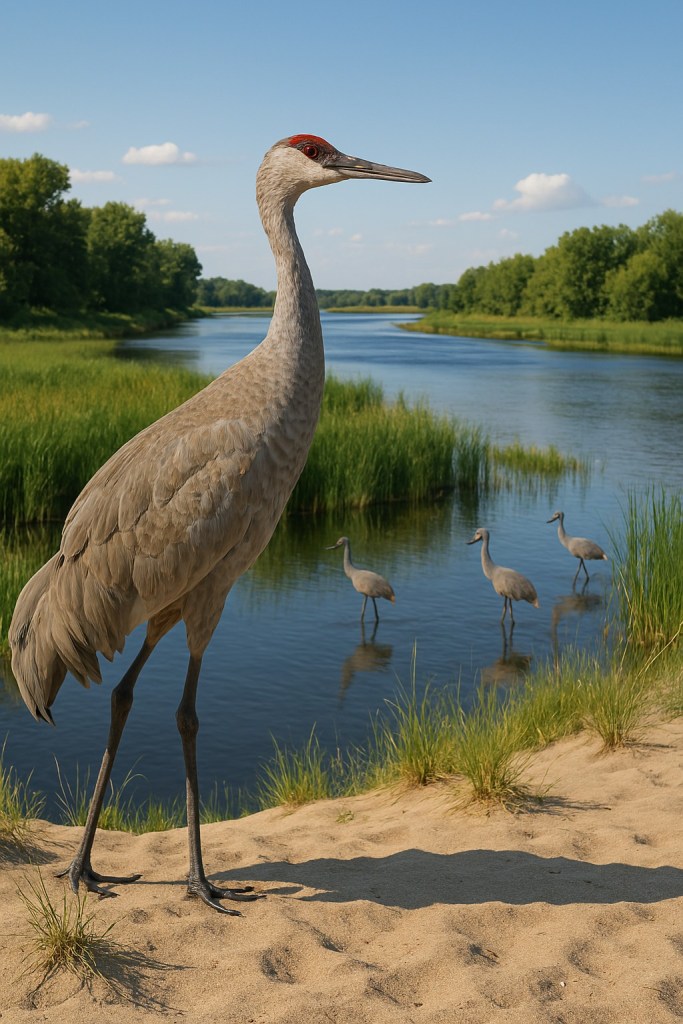
Sandhill cranes are known for their towering height (about a meter), along with the distinctive red spot on their heads, and their trumpet-like call, which is created by their unique anatomy. The sandhill’s long windpipe stretches down into its sternum, which enhances its sound by lowering the pitch and deepening the resonance of its resounding calls. The sandhill cranes are also known for their intricate dancing rituals, consisting of bowing and leaping, and occasionally throwing a corn cob into the air. When the ritual is over and a partner is chosen, they will remain with a mate for life.
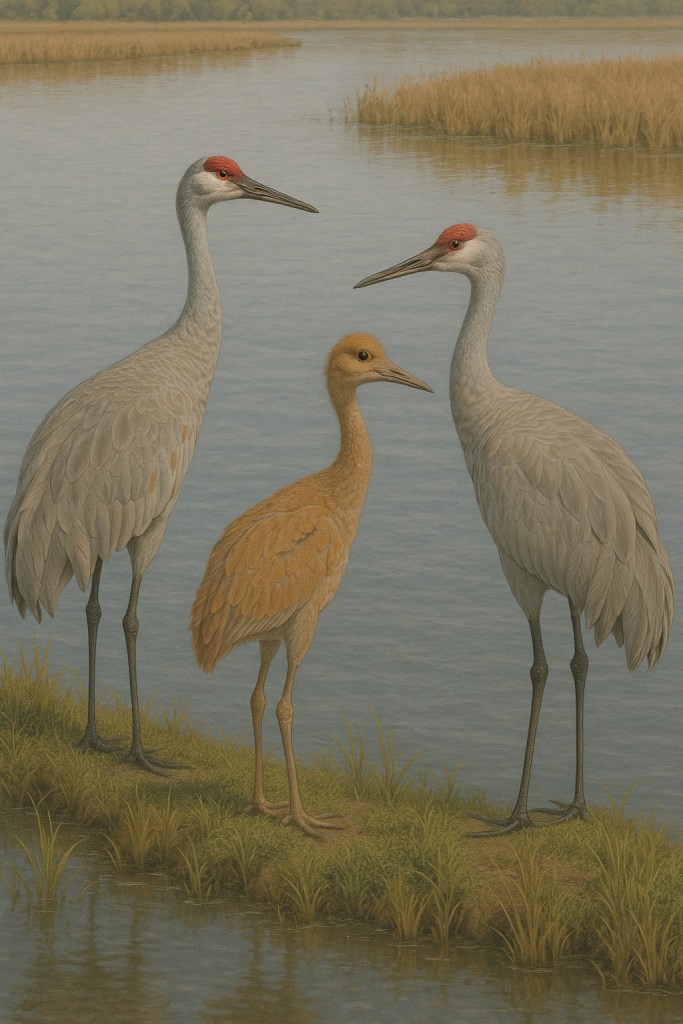
The Platte River has been an essential and enduring rest stop along the migration of sandhill cranes since the river was first formed after the last ice age, about 10,000-12,000 years ago. Because of their essential migratory tie to the river, they were given the name “sandhill crane,” because they tend to gather in the sand dunes along the river.
Sandhill cranes use this necessary roosting place to rest, socialize, and rejuvenate themselves. The water’s edge, along with nearby farmland, provides ample food sources for them to replenish their energy. Sandhills eat insects, along with wheat grains and plentiful corn leftover by farmers, a beneficial interaction, as this leftover volunteer corn is eaten before it can sap nutrients from the next year’s crop. Many will gain as much as a pound in bodyweight before making the journey north.
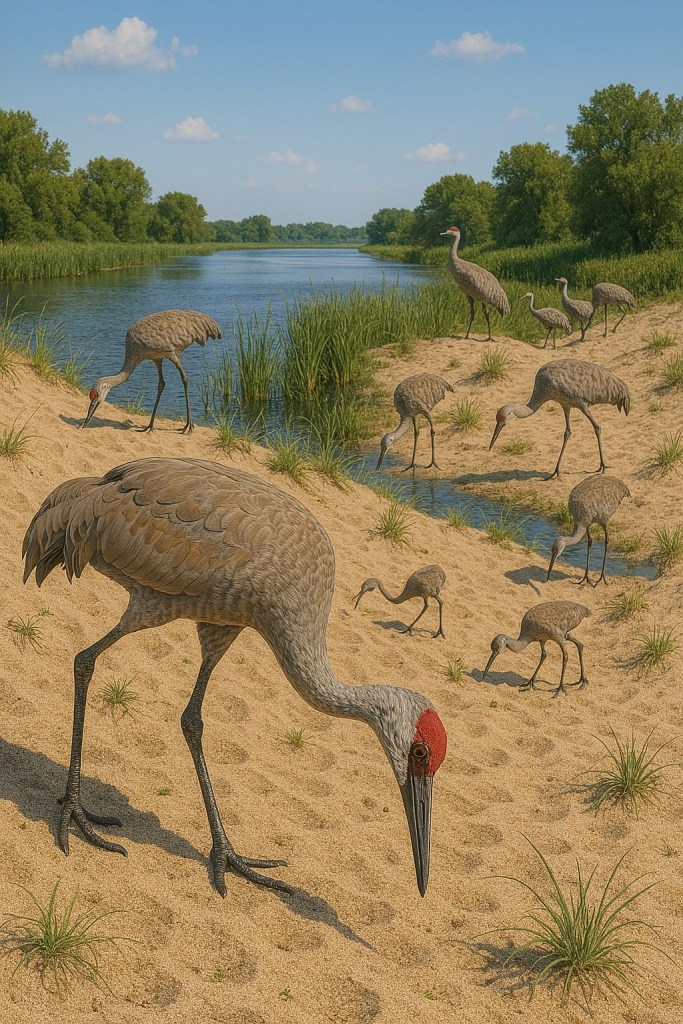
Sandhills spend the winter before migration in Mexico and the southern United States, including New Mexico’s Bosque del Apache, California’s Sacramento Valley and Tulare Basin, and certain parts of Florida. Summers are spent breeding and nesting in the north, with many landing in Canada and Alaska, particularly within the boreal forest, and even as far north as Siberia.
Sandhill cranes are strong but also strategic fliers. Like many birds, they tend to locate thermal updrafts and ride them upwards to a few thousand feet above the ground, then glide easily toward their destination, losing altitude slowly, before ultimately locating another thermal updraft to propel them upwards again. This reliance on gliding and manipulation of natural air flow conserves their energy for the 200-300 miles they travel each day. Sandhills will seek out wetlands to rest in during the night, and repeat this daily cycle until they arrive at their destination.
Getting a box seat to view one of nature’s extraordinary displays is a unique Grand Island experience. Hopefully these fun facts will help you to understand more about this yearly event, and appreciate the beauty of this remarkable natural phenomenon.
 Webb Plaza
Leave a comment